
 Image 1 of 9
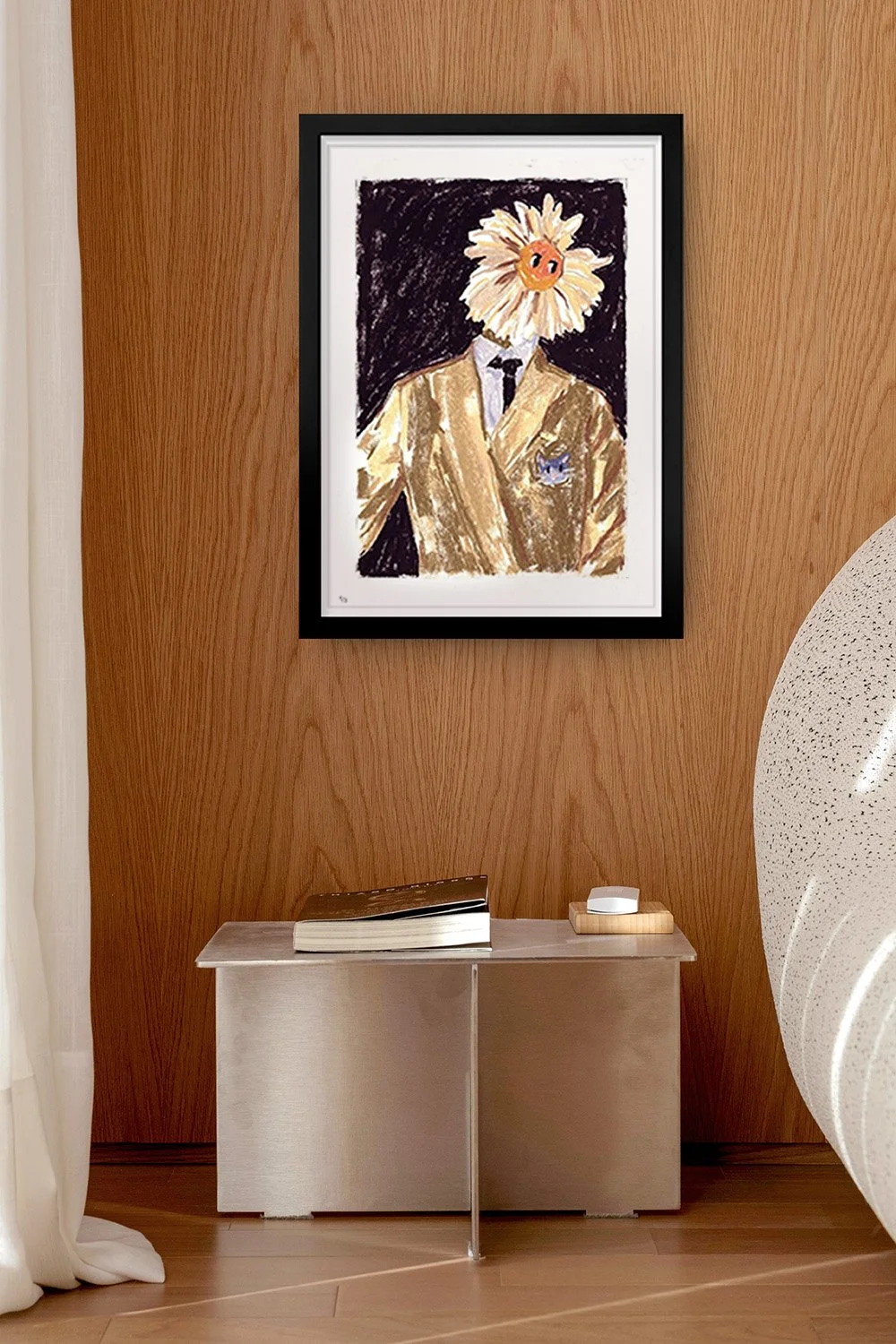 Image 2 of 9
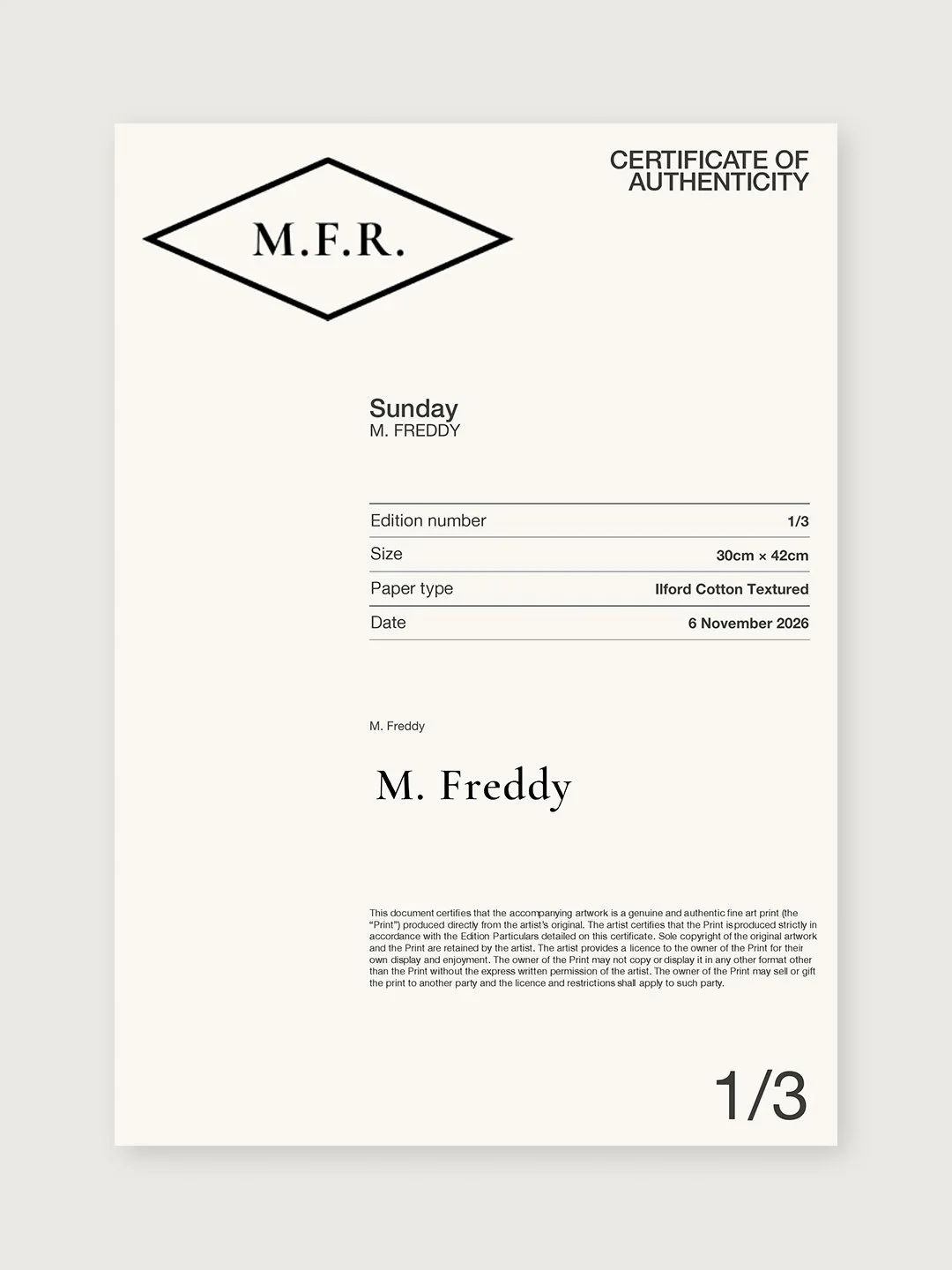 Image 3 of 9
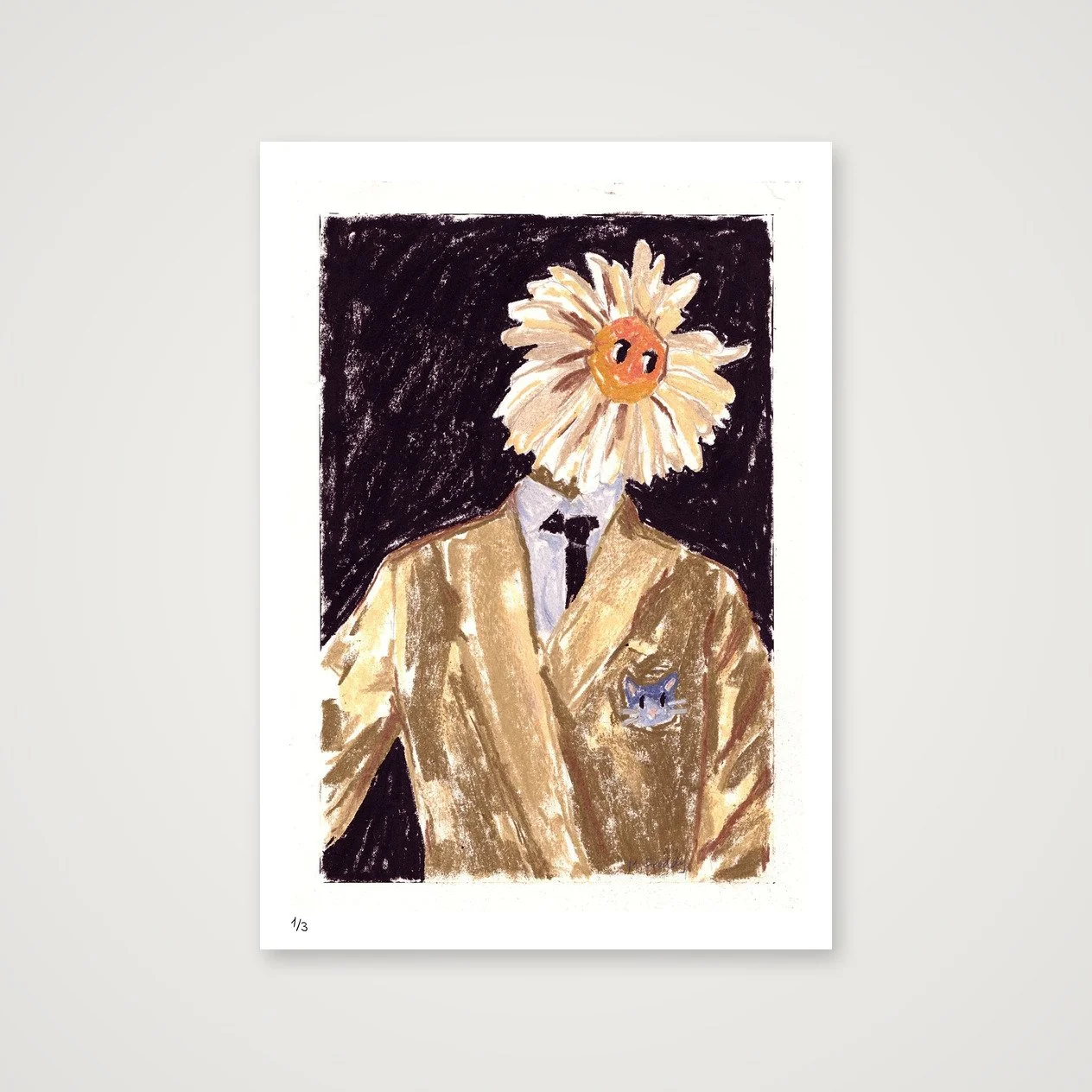 Image 4 of 9
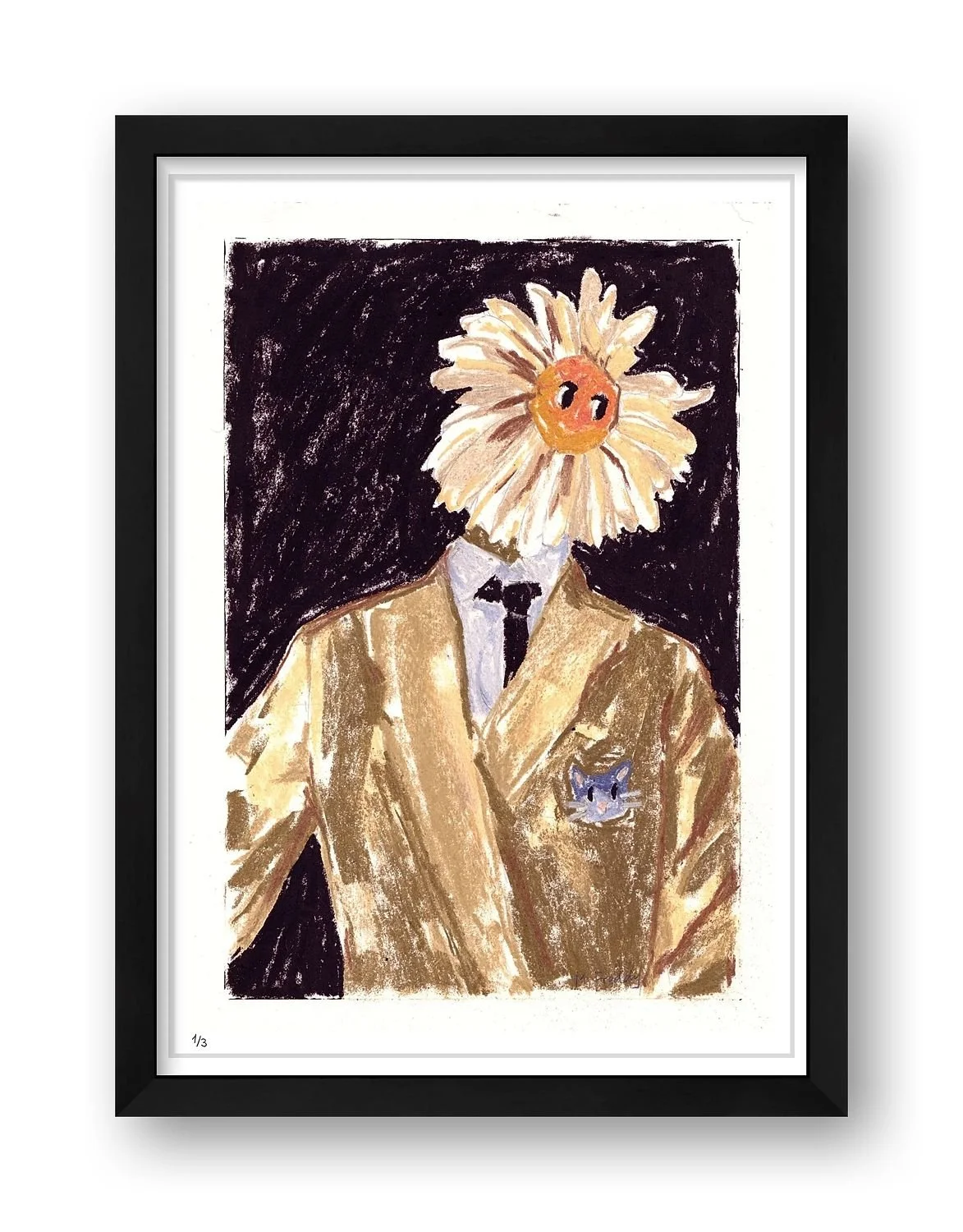 Image 5 of 9
 Image 6 of 9
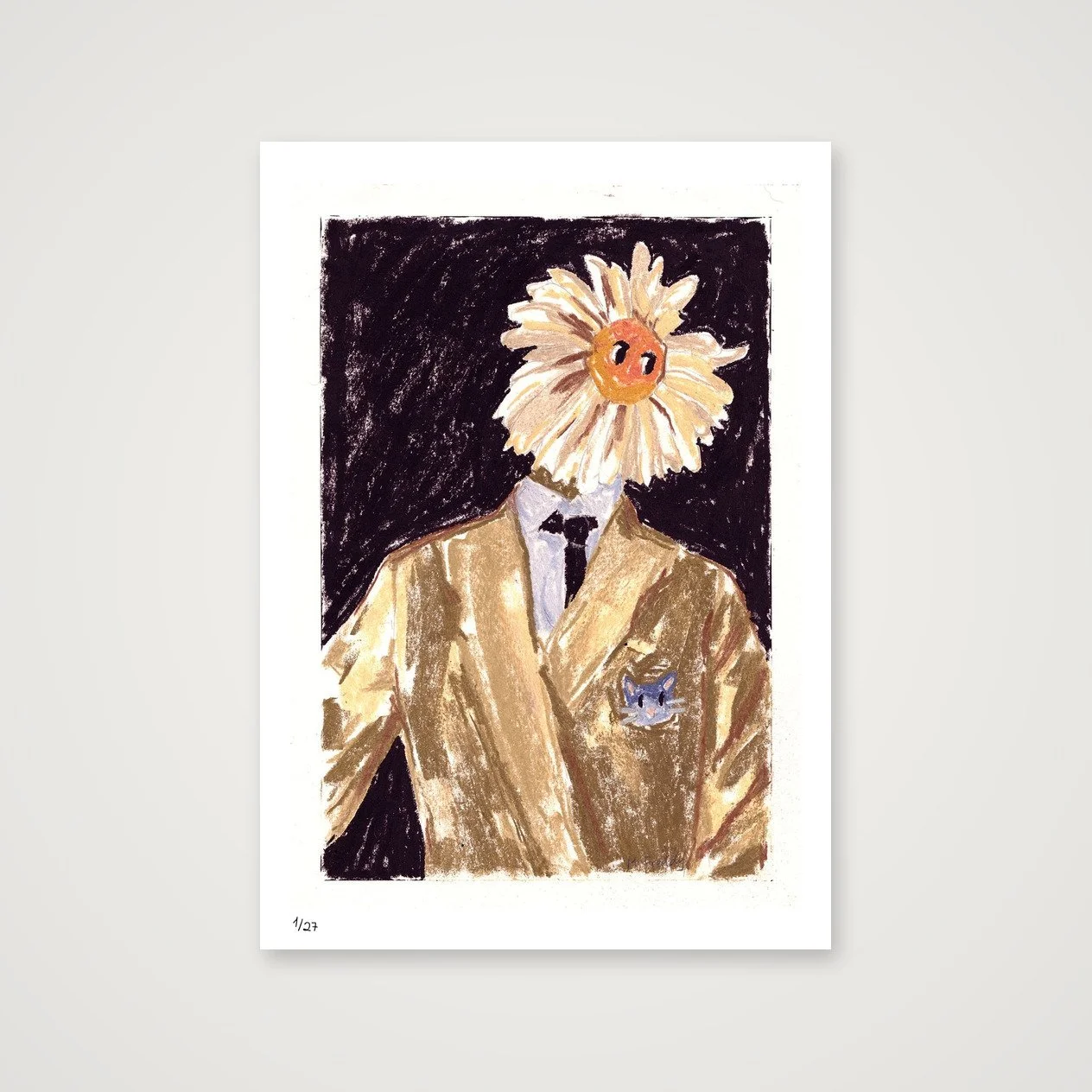 Image 7 of 9
 Image 8 of 9
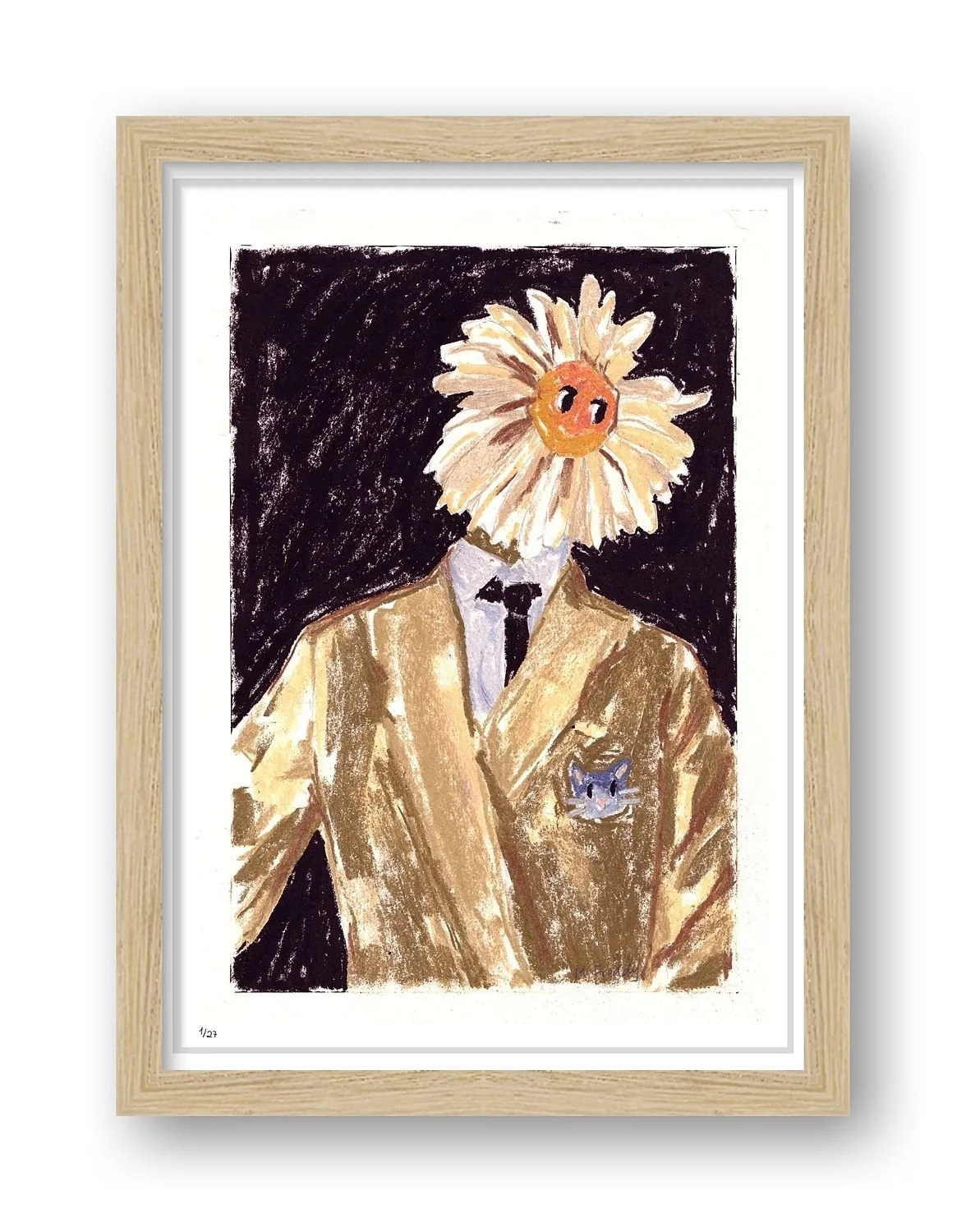 Image 9 of 9
Our guide for collectors
We would be delighted to offer personal assistance at Concierge@MFreddy.com
-
Certainly. A limited-edition print makes a considered and lasting gift. Each work is accompanied by its Certificate of Authenticity, providing a record of its edition and authenticity.
If you are purchasing on behalf of someone else, our Concierge can assist with arrangements and answer any questions concerning the presentation and delivery of your gift.
We also welcome enquiries regarding the documentation of gifted works, and provenance tracing to help preserve their ownership history.
-
A limited-edition print is an authorised fine art reproduction produced in a predetermined quantity. Unlike open editions, which may be printed indefinitely, a limited edition has a finite number of impressions.
Each edition is produced to the artist's specifications, with particular attention to colour fidelity, paper quality, and archival permanence. Once the edition is complete, no further impressions will be made within that edition.
Every Studio of M. Freddy limited-edition print is made-to-order and accompanied by a Certificate of Authenticity.
-
Yes. Each print is individually numbered, identifying its place within the edition. The first A4 print will be marked 1/ 27, the second one will be marked 2/27, and so forth. The edition number, together with its Certificate of Authenticity, forms an important part of the work's identity and collecting history.
-
The present collection constitutes the 1st Edition. Once an edition has sold out, no further impressions will be produced within that edition.
As the copyright holder, the artist may introduce a subsequent edition in the future. Any such print release would be distinctly identified by their edition number to preserve the integrity of the original release.
-
We believe that an artwork's story extends well beyond its first acquisition.
The Studio of M. Freddy maintains digital purchasing records through its studio website, providing a reference for the original acquisition of each work.
Our Concierge is also available to assist with enquiries concerning ownership history, gifts and future transfers. We recommend retaining your original purchase correspondence and contacting us from the original purchasing email address before transferring or gifting a work.
This allows us to assist with the appropriate documentation and maintain continuity in the artwork's collecting history.
For personal assistance, please contact Concierge@MFreddy.com.
-
Giclée refers to general high-quality ink-jet printing, which is why the specifics are important. There are three main factors to understanding the quality of a fine art print, including (1) the light-fastness of the ink, which describes the ink’s ability to resist fading from sunlight or artificial light, (2) pigment-based ink vs. dye-based ink, which may bleed when it comes into contact with water, (3) the archival qualities of the paper it is printed on. Of course, colour range and accuracy matters as well, but these factors are typically a given, and not what distinguishes a quality archival fine art print.
M. Freddy’s prints are produced with Epson Sure Color P9000 using Epson UltraChrome HDX wide-gamut, pigment-based inks. They are printed on Ilford 310gsm, 100% cotton textured paper. There is no research on the exact ink and paper combination, and the longevity of the work on paper will depend heavily on storage and display conditions. However, Wilhelm Research suggests colour prints with Epson Sure Color P9000 is likely to last up to 100 years (unframed under bare bulb), up to 200 years (framed with glass), and more than 250 years (framed with UV filtered glass). You can read the studies here and here. Of course, it is pivotal to recognize that these are best-case-scenarios under lab conditions. The longevity of your work on paper will depend on your specific situation.
Works on paper are more resilient than most would think. You may be surprised by how gracefully they age. Consider the notes tucked into your favourite book, written on humble copier paper, or the magazine you have kept for years. Those were never meant to last and yet they have. M. Freddy’s artworks are made of fine art materials carefully chosen to support their longevity.
-
In most cases, it comes down to thoughtful placement — choosing the right wall, an appropriate frame, and a suitable place for storage. If you avoid places that causes books to yellow, that alone goes a long way to preserving your work on paper.
M. Freddy’s Contemporary Fine Art Care Guide offers more detailed explanation and guidance. The Concierge is delighted to assist you as well. Simply get in touch via Concierge@MFreddy.com.
-
We currently offer complimentary DHL courier delivery, with import duties covered, for orders to the United Kingdom, United States and Canada.
We work with specialist fine art print partners to ensure that each work is prepared and dispatched with care.
For deliveries to other destinations, please contact our Concierge to discuss available arrangements.
-
Yes. We welcome the opportunity to introduce collectors to the artist and his practice personally.
Virtual appointments may be arranged for those wishing to discuss a particular work, explore the collection, learn more about the materials and creative process, or receive guidance when considering an acquisition.
Please contact Concierge@MFreddy.com to arrange a private appointment.
We look forward to welcoming you to the studio.

Artist biography
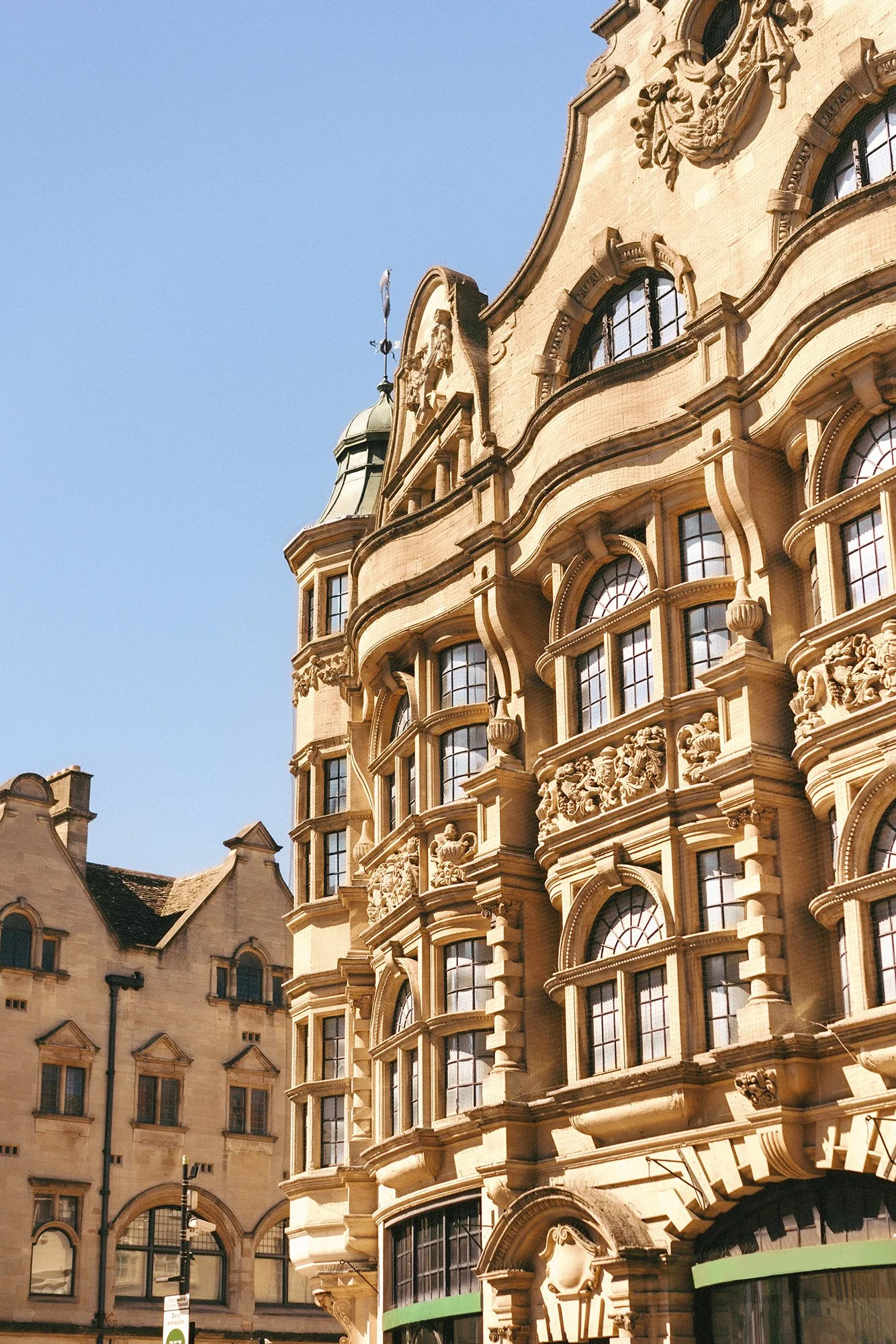
M. Freddy is a contemporary artist who explores the quiet brilliance of subcultures and their roles in social change. His work has recently been featured by Lomography and exhibited as part of a group show at the University of Oxford titled "Responding to AI". Cherwell Newspaper described him as "[a] star" and Christ Church, University of Oxford praised his work "personal and reflective" in an increasingly digital world.
A New York Upper East Sider in Oxford, Freddy holds a BFA from the Parsons School of Design and an MA from Johns Hopkins. He was also a Departmental Visiting Student at the University of Oxford, and currently mentors at Yale’s Tsai Center for Innovative Thinking. He is a former student of James Romberger, an artist in the East Village canon alongside Basquiat, Wojnarowicz, and McGinley.
Savoir faire
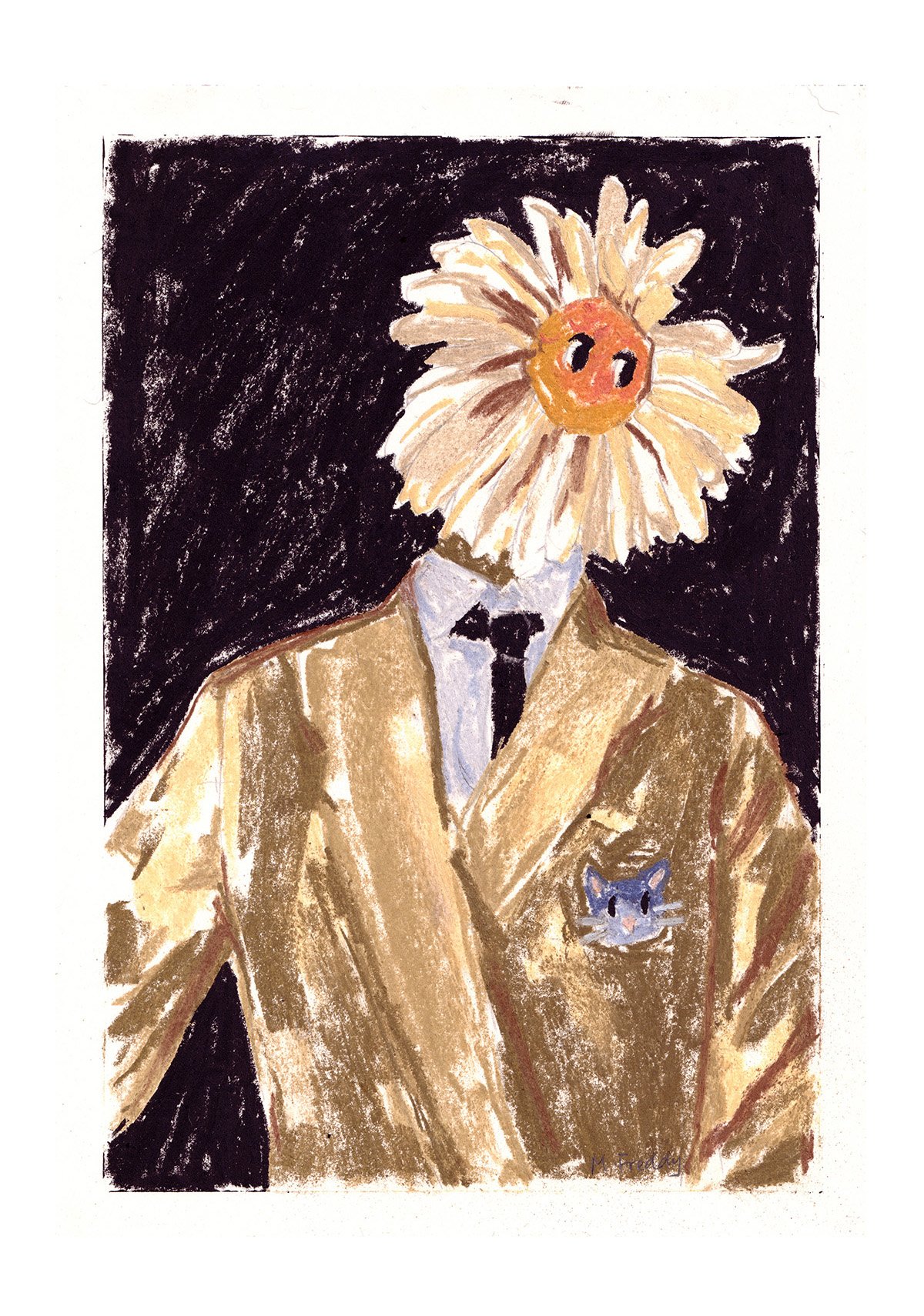
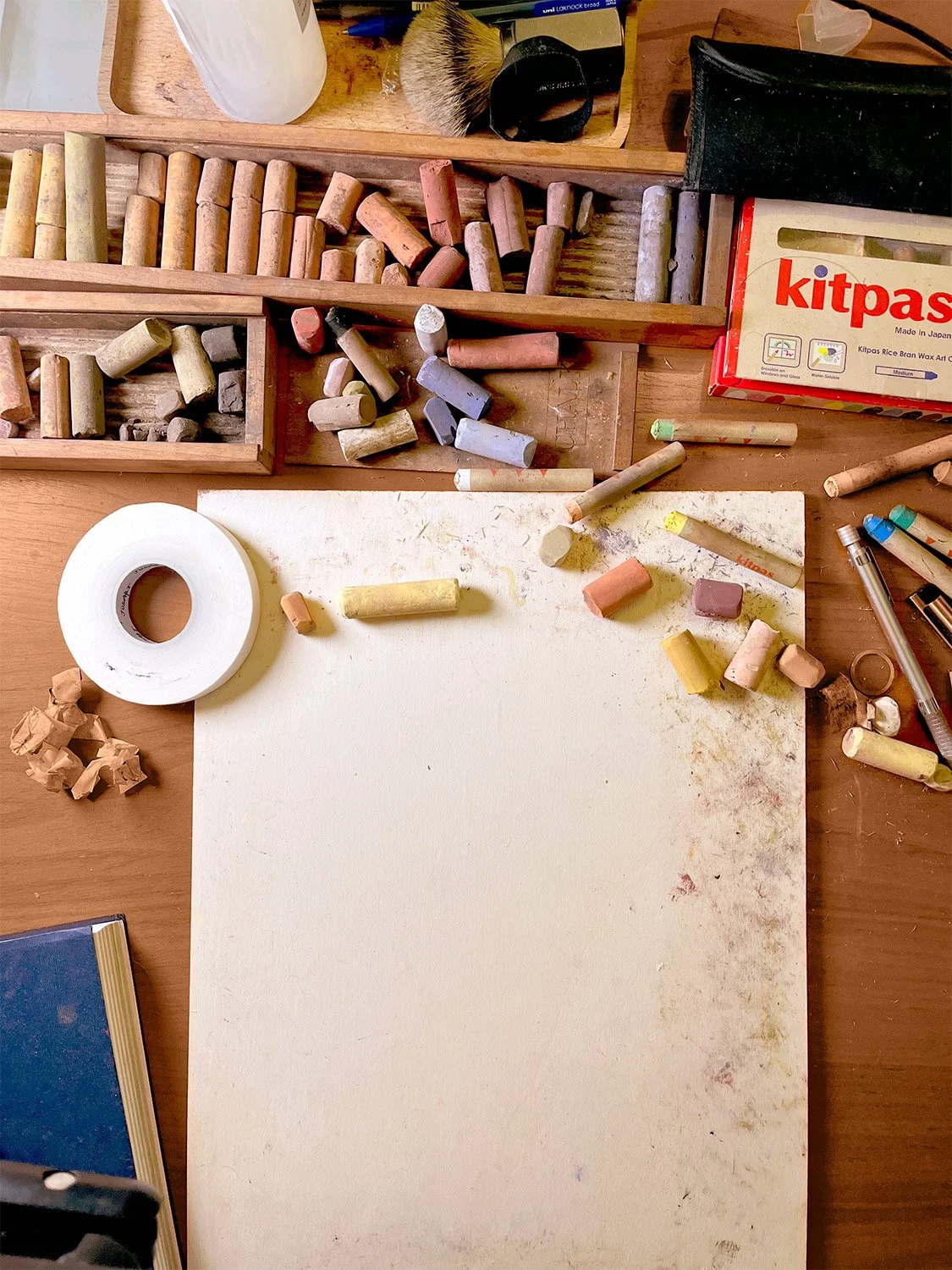
Freddy’s original artworks are made primarily with archival, non-toxic chalk pastels from Chalk Copenhagen, using chalk sourced from Denmark’s Stevns Cliffs. The earthy palette of the pastels is set against bold, graphic colours of Kitpas’ non-toxic rice bran wax crayons made in Japan, like the signature dark background in The Horticulture Gala. The drawings are completed on 100% cotton, 300gsm, hot-pressed, Arches Aquarelle paper, which meets the ISO 9706 archival standard.
His use of chalk pastels reflects the influence of Romberger’s work and captures the spirit of action painting. The medium demands a certain decisiveness: there is little room for error, no opportunity to erase, and too much reworking can quickly muddy the surface. Even though Freddy does not “attack the canvas” as some abstract expressionists do, there is a sense of Pollock’s “controlled accident” at play: he starts with a sketch and let the chalk determine the precise outcome. These bold, energetic marks hold the artwork together.
We believe an artwork's story extends beyond its first acquisition. We welcome enquiries concerning the provenance of original artworks and limited-edition prints. Our Concierge is available to assist with matters relating to gifts, ownership history, and future transfers. Guidance on the care and preservation of your artwork is also available to our collectors. Please email Concierge@MFreddy.com for personal assistance or museum-quality archival framing.